
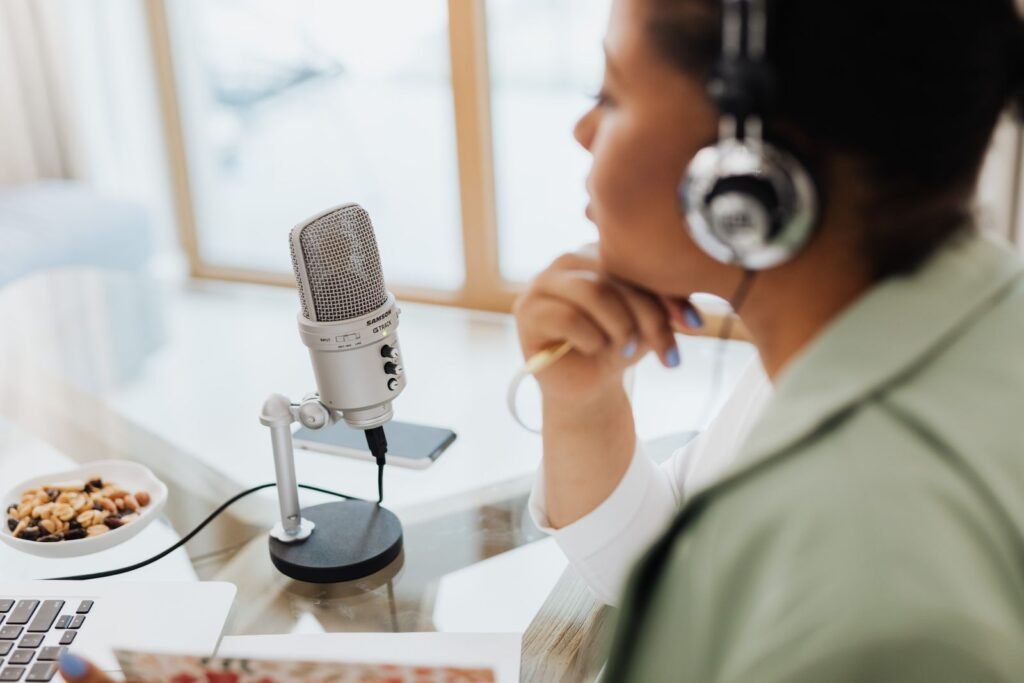
The best AI voice generator in 2026 is no longer a robot reading your script in a flat monotone. The top tools now produce narration that most listeners cannot tell from a human recording — with pauses, emphasis and emotion that fit the sentence. That is why YouTubers, podcasters, course creators and audiobook narrators are all reaching for the same category of tool, but for very different jobs. A podcaster fixing a flub needs something different from a trainer building a 40-hour course, and both need something different from a developer wiring voice into an app.
This guide covers the ten AI voice generators actually worth your time in 2026, grouped by the job they do. Every price was checked against the vendor’s own pricing page (or a recent independent review that checked it) in November 2026. Voice tools price by characters, credits or minutes, so each section states the unit clearly. Prices change often — and several vendors are running Black Friday promotions as this is written — so confirm on the vendor’s site before you pay. One warning up front: almost every free plan in this guide is for personal, non-commercial use only. If you plan to monetise the audio, you need a paid plan.
The best AI voice generators at a glance
| Tool | Best for | Free plan? | Starting paid price |
|---|---|---|---|
| ElevenLabs | Most realistic voices overall | Yes (10,000 credits/mo, non-commercial) | $6/month (Starter); $5/month billed annually |
| Murf AI | Scripted video and e-learning voiceovers | Yes (10 minutes total, no downloads) | $29/month (Creator); $19/month billed annually |
| Speechify Studio | High-volume narration on a low yearly fee | Yes (600 credits, no export) | $100/year (Starter, yearly only) |
| Fish Audio | Cheapest cloning + API for creators and developers | Yes (8,000 credits/mo, non-commercial) | $15/month (Plus); $11/month billed annually |
| WellSaid Labs | Corporate training with licensed actor voices | No | Custom quote (was $19/month until Nov 2026) |
| Descript | Podcasters fixing audio in their own voice | Yes (1 media hour/mo, watermarked) | $24/person/month (Hobbyist); $16/month billed annually |
| Lovo AI | All-in-one voiceover, video and subtitles | Yes (reported ~20 minutes, limits unpublished) | $29/user/month (Basic); $24/month billed annually |
| Fliki | Faceless YouTube and social video | Yes (3 credits/mo, watermarked) | $28/user/month (Standard); $21/month billed annually |
| Narakeet | Occasional use, no subscription | Yes (20 conversions, non-commercial) | $6 one-time for 30 minutes (pay-as-you-go) |
| NaturalReader | Accessibility and personal reading | Yes (unlimited free voices, listening only) | $13.90/month personal (Lite); commercial from $29/month |
1. ElevenLabs
Best for: Creators and businesses who want the most realistic voices — YouTube narration, audiobooks, ads and dubbing.
ElevenLabs is the default answer in this category for a reason: its v4 model produces the most natural-sounding speech of any tool on this list, across 90+ languages, with audio tags for laughter, pauses and emphasis, multi-speaker dialogue and a Dubbing Studio that translates video while keeping the original speaker’s voice. One monthly credit pool covers text-to-speech, cloning, dubbing, Studio long-form narration and voice agents.
Pricing: Free costs $0 with 10,000 credits a month — about 10 minutes, since one credit is roughly one character — plus 3 Studio projects. It is non-commercial only, with attribution required. Starter is $6 a month, or $5 a month billed annually ($60 a year), with 30,000 credits (about 30 minutes), a commercial licence, Instant Voice Cloning and Dubbing Studio. Creator is $22 a month ($18.33 billed annually) with 121,000 credits and one Professional Voice Clone. Pro is $99 a month with 600,000 credits. A Black Friday offer of up to 55% off was running on 20 November 2026 and ends 1 December — treat it as a promotion, not the list price.
Pros: The most realistic voices in this guide, and the only tool here that covers narration, dubbing, cloning and voice agents in one subscription. Cons: The free plan cannot be used commercially, credits are characters so long audiobooks burn through them fast, and Instant Clone consent is a checkbox only (see the cloning section below).
2. Murf AI
Best for: Scripted voiceovers for video, e-learning and training, edited on a timeline.
Murf is a Studio editor, not a raw text-to-speech API. You paste a script, pick from 200+ voices in 30+ languages, then fine-tune pitch, speed, pauses and pronunciation word by word, add royalty-free music, and sync the narration to slides or video on a timeline. Only new or edited text consumes voice-generation time — changing the voice, style, pitch or speed does not. It plugs into PowerPoint, Google Slides, Canva and Adobe Captivate, which is why training teams like it.
Pricing: Free costs $0 and gives 10 minutes of voice generation in total — not per month — with no downloads and no commercial rights, so treat it as a demo. Creator is $29 a month, or $19 a month billed annually ($228 a year), with 2 hours of voice generation a month (24 hours a year), unlimited downloads and commercial rights. Business is $99 a month ($66 billed annually) with 8 hours a month. One October 2026 review lists Creator’s yearly allowance as 48 hours a year rather than 24 — the majority of sources say 24, so check the checkout page. The Falcon API is a separate product at $0.01 per 1,000 characters.
Pros: The per-word control on a timeline is the best in this guide for scripted training content, and re-voicing a line is free unless you change the text. Cons: The free plan cannot download anything, there is no self-serve voice cloning (cloning is Enterprise only), and the API is sold separately from the Studio subscription.
3. Speechify Studio
Best for: High-volume narration — audiobooks, courses and faceless YouTube — on a low yearly fee.
Speechify Studio is the voice-generator product, and it is easy to confuse with Speechify Reader, the read-aloud app. They are separate products with separate bills, and the distinction matters: Reader Premium ($29 a month or $139 a year) is for personal listening only and does not cover commercial voiceover at all. Studio is the one for creators, with a Voiceover Studio of 1,000+ voices, a Dubbing Studio, a Voice Changer, AI avatars and a stock media library.
Pricing: Free costs $0 with 600 Studio credits — about 10 minutes, since one credit is one second of voiceover — with the full toolset, but no MP3 export and no commercial rights. Starter is $100 a year only (about $8.33 a month equivalent) with 86,400 credits a year, or 24 hours of voiceover, plus commercial usage rights. Creator is $300 a year with 345,600 credits, or 96 hours a year. Monthly Studio prices ($19 and $49) appeared in October 2026 listings, but the pricing page now shows yearly prices only — there may be no monthly option.
Pros: The cheapest honest yearly rate for heavy narration in this guide, with dubbing and avatars included. Cons: Yearly-only billing with no monthly flexibility, the free plan cannot export, and the cloning situation is unclear — some sources say cloning sits on paid Studio plans, others say the vendor’s own pages do not describe Studio cloning at all. Verify on Speechify’s site before buying for cloning.
4. Fish Audio
Best for: Creators and developers who want cheap, expressive text-to-speech and cloning, or a pay-as-you-go API.
Fish Audio is the budget pick that does not feel like a budget pick. Its S2.1 Pro model is genuinely expressive, it covers 83 languages, and the API is priced per million bytes rather than per subscription, which suits developers and irregular users. The web plans are cheap for what they include: the Plus tier already carries a Professional Voice Clone slot and commercial rights.
Pricing: Free costs $0 with 8,000 credits a month — up to 7 minutes — and up to 500 characters per generation, for personal, non-commercial use only. Plus is $15 a month, or $11 a month billed annually ($132 a year), with 250,000 credits a month (up to 200 minutes), 10 private voice slots, one Professional Voice slot and commercial use. Pro is $100 a month ($75 billed annually) with 2,000,000 credits. A 50% off first-year promotion was live on the vendor page on 28 November 2026 (Plus at $5.50 a month for the first year) — quote the list price, not the promo, and check the renewal rate. The API is separate: $15 per 1 million bytes for S2.1 Pro. One inconsistency to note: the vendor FAQ says roughly 600–625 credits make a minute, which would make Plus worth about 400 minutes, but the plan card says up to 200 minutes — do not convert credits to minutes with a single figure.
Pros: The cheapest paid entry here with commercial rights and a clone slot, plus a genuinely usable API. Cons: The free plan is thin (7 minutes, 500 characters per generation), the credit-to-minute maths does not add up, and the live promo price will not be the renewal price.
5. WellSaid Labs
Best for: Corporate training, L&D and product marketing teams who want licensed, actor-consented voices.
WellSaid Labs is the only tool on this list built for teams rather than creators, and its selling point is trust: every stock voice is a licensed recording of a professional actor who gave consent and is paid when their voice is used. There is no instant cloning and no deepfake risk — custom voices are built under contract on Enterprise only, with a real actor. Usage is counted on finished voiceover only, so rehearsals and re-renders do not eat your allowance, and it integrates with Adobe Premiere Pro and Express.
Pricing: WellSaid Labs removed all public prices in late November 2026 — its pricing page now says every plan is custom-scoped and offers no free plan, only a demo. The prices listed until mid-November 2026 were: a free Trial with 3 download minutes a month and no commercial rights; Starter at $19 a month ($10 billed annually); Pro at $49 a month ($33 annually); Business at $160 per user a month billed annually; Enterprise custom. Treat those as recent history, not current prices, and get a quote before budgeting.
Pros: The strongest consent and licensing story in this category, and the only tool here where rehearsals are free. Cons: No published prices and no free plan any more, and it is explicitly not built for solo creators or one-off projects.
6. Descript
Best for: Podcasters and YouTubers who edit audio and video and want to fix mistakes in their own voice.
Descript is an editor first and a voice generator second. You edit the transcript and the timeline follows; Studio Sound cleans up the recording, filler words are removed in one click, and captions run in 61 languages. The voice feature — formerly called Overdub, now split into AI Speech and Regenerate since March 2026 — lets you type new words in your own cloned voice, or fix words you already recorded. Regenerate handles up to 250 characters per action in English only, and it runs on ElevenLabs models.
Pricing: Free costs $0 with 1 media hour a month, 100 AI credits given once (not monthly), 720p export with a watermark and 5 GB of storage, plus a limited AI Speech trial. Hobbyist is $24 per person a month, or $16 billed annually, with 10 media hours a month, AI Speech with custom voice clones and Regenerate, and watermark-free 1080p export. Creator is $35 a month ($24 annually) with 30 hours a month and 4K export. Business is $65 a month ($50 annually) with dubbing in 30 languages.
Pros: The edit-by-transcript workflow is unmatched for podcasts, and the consent process for cloning is strong — the speaker must record a consent statement in English before Descript builds the voice. Cons: Voice is a feature inside an editor, not a standalone text-to-speech tool, and the terms do not state whether AI voices may be used commercially — get written confirmation before monetised or client use of a stock AI speaker.
7. Lovo AI (Genny)
Best for: Video creators and marketers who want voiceover, editing and subtitles in one tool.
Lovo’s Genny is an all-in-one browser studio: text-to-speech with 500+ voices in 100+ languages, voice cloning, an AI writer, auto-subtitles in 20+ languages, image and sound generation, and a timeline video editor. It is the tool to reach for when the voiceover is one step in making a finished video — YouTube, training, ads or audiobooks — rather than the whole job.
Pricing: Free costs $0, reported at around 20 minutes of voice generation with watermarked video exports, no downloads and personal use only — but the vendor pricing page lists no free-plan limits at all, so treat the 20-minute figure as reported, not confirmed. Basic is $29 per user a month, or $24 billed annually ($288 a year), with 2 hours of voice generation a month, 5 voice clones and commercial rights. Pro is listed at $48 a month, but $24 a month in the first year (50% off, annual billing) — the price rises to $48 after year one. Pro+ is $149 a month list, $75 a month in the first year, with 20 hours a month.
Pros: The most complete creator studio here — voice, writer, subtitles and video editing in one subscription. Cons: The free plan’s limits are unpublished, the first-year promo hides the real renewal price, and cloning consent is the weakest in this list: the terms require written consent, but a 2024 investigation found Genny only asked users to tick a checkbox, with no live verification that consent was obtained.
8. Fliki
Best for: Faceless YouTube, TikTok and explainer videos — script to finished narrated video.
Fliki turns a script, a blog post, a PowerPoint deck or a prompt into a narrated video, with 2,000+ AI voices in 80+ languages, stock media, avatars, captions and translation. The voice is a means to a finished video, not a standalone text-to-speech tool, which is exactly what a faceless channel needs: write the script, pick a voice, and publish.
Pricing: Free costs $0 with 3 credits a month — the vendor’s own llms.txt says 5, an unresolved contradiction — 300 voices, 720p exports with a Fliki watermark, videos up to 5 minutes, and no commercial use. Standard is $28 per user a month, or $21 billed annually ($252 a year), with 180 credits a month, 1,000 voices, 1080p export, one voice clone and commercial rights including YouTube monetisation. Premium is $88 a month ($66 annually) with 600 credits a month, three clones and API access. A Black Friday 50% off annual promotion was live on 28 November 2026 (Standard at $14 a month on the annual rate) — quote the list price, not the promo.
Pros: The fastest route from script to publishable video in this guide, with a huge voice library and stock media built in. Cons: Credits buy finished video, not just audio, so a re-render costs credits; the free plan is 3 credits a month; and the voice is tied to the video platform.
9. Narakeet
Best for: Occasional use, PowerPoint-to-video, and anyone who refuses another subscription.
Narakeet does not sell a subscription at all. You buy a pack of minutes once and spend it whenever you create audio or video — and the credits never expire. That makes it the cheapest honest commercial licence in this category: one $6 purchase buys 30 minutes and permanent commercial rights, with no renewal to forget. It covers 900+ voices in 100+ languages, turns slideshows into narrated video, and handles transcription.
Pricing: Free costs $0 with 20 conversions, a 1 KB audio script cap, no commercial use and no API — it is for testing only, and free accounts cannot hear a full draft before paying. The one-time packs are $6 for 30 minutes ($0.20 a minute), $45 for 300 minutes ($0.15), $100 for 1,000 minutes ($0.10), $200 for 2,500 minutes ($0.08) and $500 for 10,000 minutes ($0.05). Any paid pack converts the account to commercial use. Voice cloning is not part of Narakeet’s published plans.
Pros: No monthly bill, credits that never expire, and the cheapest route to a commercial licence anywhere in this guide. Cons: The per-minute cost is high at low volumes compared with a subscription, the free account is thin, and there is no voice cloning.
10. NaturalReader
Best for: Accessibility and personal reading — listening to PDFs, books and articles.
NaturalReader is two products that share a name and almost nothing else, and the distinction is the whole story. The Personal product is a reader for listening to documents: the free plan gives unlimited listening with the free voices, 20,000 Lite characters a day and 4,000 Plus characters a day, but no MP3 download and personal use only. The Commercial product is a separate AI voice generator for publishing voiceovers, with its own prices and licence. Buying the wrong one is the most common mistake with this tool.
Pricing: Personal plans: Free at $0; Lite at $13.90 a month or $79 a year (1 million MP3 characters a month); Plus at $20.90 a month or $119 a year (adds up to 2 cloned voices); Pro at $25.90 a month or $159 a year. Personal audio is for private listening only — it cannot be published or used on YouTube. Commercial plans: Starter at $29 per user a month ($16.50 a month billed annually, $198 a year) with 500,000 credits a month; Creator at $49 a month ($24.75 annually) with 2 million credits; Team at $33 per user a month with a two-user minimum. One source lists a “Premium $9.99 a month” app-store plan that does not match the Lite/Plus/Pro ladder — treat it as unverified.
Pros: A genuinely useful free reader, strong accessibility features, and a clearly licensed commercial product. Cons: Two products with similar names is confusing, personal plans cannot be used commercially at all, and commercial plans start at $29 a month.
ElevenLabs vs Murf vs Fish Audio: which one wins?
These are the three tools most buyers compare, and they win different jobs. ElevenLabs wins on realism — its v4 voices are the hardest to tell from a human, and it covers narration, dubbing and voice agents in one credit pool. Murf wins on control — the timeline editor with per-word pitch, speed and pause settings is the best tool here for scripted training and video voiceover. Fish Audio wins on price — Plus at $15 a month ($11 billed annually) undercuts both, includes a Professional Voice Clone slot, and has the cheapest usable API.
| ElevenLabs | Murf AI | Fish Audio | |
|---|---|---|---|
| Starting paid price | $6/month ($5 annual) | $29/month ($19 annual) | $15/month ($11 annual) |
| Free plan | 10,000 credits/mo, non-commercial | 10 minutes total, no downloads | 8,000 credits/mo, non-commercial |
| Voice cloning | Yes (Instant from Starter) | Enterprise only | Yes (Professional Clone on Plus) |
| Best for | Most realistic narration | Scripted video and training | Budget cloning and API |
If you only pay for one tool: pick ElevenLabs for quality, Murf for scripted training work, and Fish Audio if budget is the deciding factor. All three have free plans, so test the same script on each before paying — the difference in voice quality is audible in about thirty seconds.
Voice cloning and consent: what to know before you clone a voice
Cloning your own voice is legitimate and useful — it lets a creator narrate in their own voice without recording every line. Cloning someone else’s voice without their permission is not. Several US states now restrict unauthorised AI replicas of a person’s voice and likeness, and platforms are tightening their rules. Before you clone any voice, check how the tool verifies consent, because the gap between tools is wide:
- Strong verification: ElevenLabs Professional Clone requires live voice verification — reading prompted lines aloud, matched to the samples — and only works for your own voice. Fish Audio’s Professional Voice Clone requires the owner to read a randomised passage live on a microphone, with the voiceprint matched to the training audio. Descript requires the speaker to record a consent statement in English before building the voice, and refuses clones of a deceased or non-consenting person. Fliki requires a consent step and identity verification before a clone is created, and blocks known public-figure samples.
- Weak verification: ElevenLabs Instant Clone and Lovo AI ask for a checkbox confirming you have rights — nothing is checked. Speechify’s API cloning uses a spoken challenge phrase issued by the vendor, which is stronger, but whether Studio cloning exists at all is unresolved (see the Speechify section).
- No cloning at all: WellSaid Labs does not offer self-serve cloning — its voices are licensed recordings of actors who consented and are paid. Narakeet does not list cloning in its published plans.
The rule is simple: clone only your own voice, or a voice whose owner has given you explicit, written permission — and keep that permission on file.
How to choose the best AI voice generator for your job
Start with the job, not the tool. Most buyers need one tool for one of six jobs: YouTube narration (ElevenLabs for quality, Fliki for faceless video, Fish Audio on a budget), audiobooks and long narration (Speechify Studio on its yearly plan, or ElevenLabs Creator), e-learning and training (Murf for scripted courses, WellSaid Labs for corporate teams, Narakeet for occasional use), podcasts (Descript, because the voice lives inside the editor), developers and API use (Fish Audio or ElevenLabs), and accessibility or personal reading (NaturalReader free).
Then check three things: the free plan’s commercial rights (almost every free plan here is personal use only — the cheapest commercial start is Narakeet at $6 once, or ElevenLabs Starter at $6 a month), the cloning consent process (see above), and the price per minute or per character at your actual volume. A subscription wins past about 40 minutes a month; below that, Narakeet’s one-time packs or Fish Audio’s cheap Plus tier cost less. And watch the calendar: Black Friday promotions on ElevenLabs, Fish Audio, Fliki and Lovo were live in late November 2026 and expire in early December, so the price you see today may not be the renewal price.
Two names you will still see in older roundups should not be on your shortlist. PlayHT shut down on 31 December 2025 after Meta acquired its parent company, and Resemble AI stopped selling voice generation to new customers in August 2026 — it now sells deepfake detection. Any guide still listing either as a buyable 2026 option is out of date.
A sensible starting stack costs nothing: ElevenLabs free to test realism, Fish Audio free to test cloning, Fliki free to test faceless video, and NaturalReader free for reading. Pay only when a free limit actually stops your work — and when you do pay, start with the tool that fits the job you do most often.
Frequently asked questions
Which AI voice generator sounds the most realistic?
ElevenLabs, by most independent comparisons in 2026 — its v4 model handles pauses, emphasis and emotion better than the rest, and its dubbing keeps the original speaker’s voice across languages. But realism depends on the voice and the script, so test the same paragraph on the free plans of ElevenLabs, Murf and Fish Audio before paying. The difference is audible in about thirty seconds.
Is there a free AI voice generator I can use commercially?
Almost none. Every free plan in this guide is personal, non-commercial use only — no downloads, no monetisation, or both. The cheapest commercial entry points are Narakeet at $6 once for 30 minutes (with permanent commercial rights and credits that never expire) and ElevenLabs Starter at $6 a month. Fish Audio Plus at $15 a month ($11 billed annually) is the cheapest subscription with cloning and commercial rights.
Can I clone my own voice?
Yes — ElevenLabs, Fish Audio, Descript, Fliki, Lovo AI and Speechify (API) all offer it, and NaturalReader Plus adds up to two cloned voices for personal use. The consent checks vary widely: ElevenLabs Professional Clone and Fish Audio’s Professional Voice Clone require live verification, Descript and Fliki require a recorded consent step, while Instant Clone on ElevenLabs and cloning on Lovo AI are checkbox-only. Never clone a voice you do not own or have written permission to use.
Can I use AI voices on monetised YouTube videos?
Yes, on paid plans with commercial rights — ElevenLabs Starter and above, Murf Creator and above, Fish Audio Plus and above, Fliki Standard and above, and any Narakeet paid pack. Free plans do not allow it. One exception to check: Descript’s terms do not state whether AI voices may be used commercially, so get written confirmation before monetised or client use of a stock AI speaker.
The bottom line
The best AI voice generator in 2026 depends on the job: ElevenLabs for the most realistic voices, Murf for scripted video and training, Speechify Studio for high-volume narration on a yearly fee, Fish Audio for the cheapest cloning and API, Descript for podcasters, Fliki for faceless YouTube, Narakeet for occasional use with no subscription, and NaturalReader for accessibility and reading. Start free, test the same script on two or three tools, and only pay when a limit genuinely gets in your way. Prices were checked in November 2026 and change often — and several Black Friday promotions expire in early December — so confirm the total cost, renewal price included, before you buy.
Pingback: Best Free AI Voice Generators in 2026: 10 Tools Compared - AIForThePros
Pingback: Best ElevenLabs Alternative in 2026: 10 Tools Compared